
Discover the Benefits of Occupational and Hand Therapy at Soleil Physical Therapy & Wellness Inc
Helping You Live a More Comfortable Life
Cooking meals. Getting dressed. Holding a grandchild. Our days are filled with small, meaningful tasks that we often take for granted. But when pain, injury, weakness, or surgery comes to visit, these simple tasks can start to feel much more challenging.
That’s why we offer both occupational therapy (OT) and hand therapy at Soleil Physical Therapy & Wellness Inc. These specialized therapies are designed to help you return to the activities that matter most. Whether you’re recovering from an injury, managing a chronic condition, or trying to prevent pain from getting worse, our team is here to help.

Our Patients Get Great Results
“I tore my MCL back in October, 2023. I never suffered such an injury before. I’ve been a Martial Artist for 30 years so this injury concerned me. Qui Trinh, DPT was my therapist. He was awesome!! The staff is very friendly. Qui, however, takes it to another level. He met me where I was and designed a program where I would succeed. He thoroughly explained the hows/why’s of the treatment and maintained a positive/can do attitude throughout. There was a period where I had plataued at about 80%. Qui never gave up on me. He asked more questions and found the solution. He added a few new movements to my program and they immediately began to advance my recovery. Today was my last visit and I’m about 95% recovered. Qui has given me good instructions and guidance so I know I’ll be better than 100% in a couple more weeks. In all, Qui provided concierge service throughout. I couldn’t ask for a better therapist.”
-N.L.
What Is Occupational Therapy?
Occupational therapy helps people participate fully in daily activities, such as self-care, work tasks, hobbies, and household responsibilities. Unlike physical therapy, which focuses on overall strength and movement, OT zeroes in on how your body functions during small but important tasks. Our ultimate goal is to help you do what you need and want to do with more ease.
We often recommend occupational therapy if you have:
- Hand, wrist, elbow, or shoulder pain
- Arthritis or other chronic pain conditions
- Nerve issues like carpal tunnel syndrome (tingling or numbness in the hand)
- Difficulty with fine motor skills, such as buttoning or gripping
- Challenges after surgery, brain injuries, or stroke
What Is Hand Therapy?
Hand therapy is a specialized area of occupational therapy focused on the hand, wrist, forearm, and elbow. Because these areas contain many small bones, tendons, and nerves, they require precise care. Hand therapy targets movement, strength, coordination, and pain control, all while protecting healing tissues.
Our hand therapists can help with:
- Arthritis in the hand or wrist
- Fractures or sprains
- Tendon or ligament injuries
- Post-surgical recovery
- Trigger finger (a finger that catches or locks)
- De Quervain’s tenosynovitis (thumb-side wrist pain)


What to Expect During Hand or Occupational Therapy
As with our physical therapy programs, our hand or occupational therapy plans are based on your symptoms, daily demands, and personal goals. We offer a wide range of specific techniques to help you achieve your goals, including:
Manual Therapy
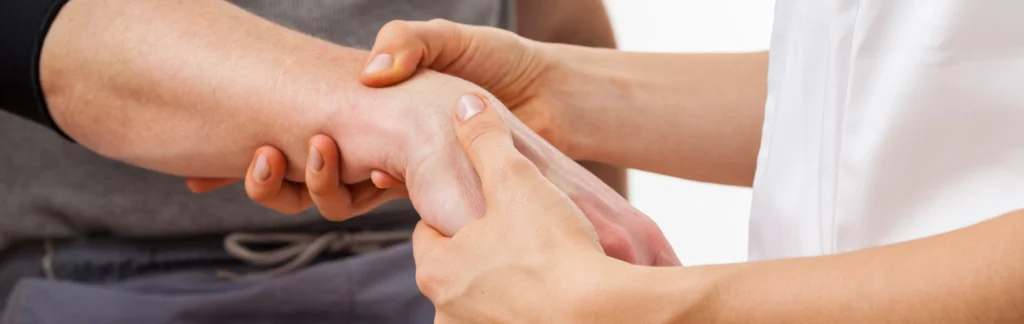
Hands-on manual therapy techniques help improve how joints, muscles, and soft tissues move together, helping to reduce stiffness, improve circulation, and ease pain. They can also address scar tissue that limits movement or causes discomfort after surgery.
Therapeutic Exercise
Targeted exercises can restore strength, mobility, and control in the hands, arms, and shoulders. These exercises are specific and purposeful, targeting the movements needed for real-life activities such as gripping, lifting, typing, or reaching.
Neuromuscular Re-Education
Neuromuscular re-education helps retrain the communication between your brain and muscles, which can become disrupted due to pain, injury, or surgery, leading to compensation or poor coordination. This treatment focuses on restoring efficient movement, improving control, and reducing unnecessary muscle tension so tasks feel easier and more natural again.
Sensory Re-Training
Our team often uses sensory re-training after nerve injury, surgery, or prolonged irritation. Changes in sensation can cause numbness, tingling, or heightened sensitivity that makes daily tasks uncomfortable, but over time, sensory retraining can improve hand awareness and tolerance for everyday activities.
Activity Modifications
We can also work with you to adjust how you perform certain tasks to reduce strain on joints and soft tissues, which can help with pain flare-ups and fatigue. Your therapists may recommend changes to posture, hand positioning, or movement strategies during work, home, or recreational activities.
Bracing and Splinting
Bracing and splinting provide targeted support to joints, tendons, and soft tissues in your hands, wrists, and arms during healing or periods of irritation. Depending on your needs, a brace may help limit painful movement, improve joint alignment, or reduce stress during daily tasks. We’ll guide you on proper use to ensure bracing supports function rather than replaces movement.
A Personalized Approach to Improve Quality of Life
At Soleil Physical Therapy & Wellness Inc, our occupational and hand therapists want to help you live with less pain during daily tasks so you can find more comfort at work, at home, and during your favorite activities. We work closely with you to create customized therapy plans that reflect your goals, your lifestyle, and your body. If you think you might benefit from these services, schedule an appointment with us today to get started.
Meet Our Team

Shannon Paisley
Office Manager

Wernjane Yue
MS, MAOM, Licensed Acupuncturist and Chinese Herbalist

Ron Maciel
B.S., PTA
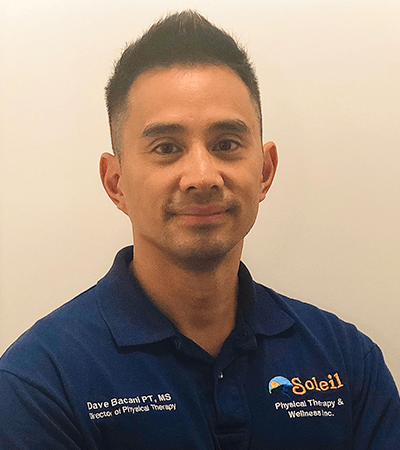
Dave Bacani
PT, DPT, MSPT, MTC, Cert. DN Clinical Director

Jameillah Newhouse
DPT, LMT
Recipe of the Month: Blender Banana Spinach Muffins

Ingredients:
- 2 eggs
- 2 medium to large extra ripe bananas
- ¼ cup pure maple syrup or honey
- ⅓ cup dairy free milk of choice
- 3 cups fresh spinach
- 1 teaspoon vanilla extract
- 1 cup packed blanched almond flour
- 1 cup oat flour
- ¼ cup flaxseed meal
- 1 teaspoon cinnamon
- 1 teaspoon baking powder
- ½ teaspoon baking soda
- ¼ teaspoon salt
- 2 tablespoons hemp seeds
Instructions:
- Preheat the oven to 375 degrees F. Line a muffin tin with 10 muffin liners (we’re only making 10 muffins). Spray the inside of the muffin liners with nonstick cooking spray so the muffins do not stick to the liners.
- Add the eggs, bananas, maple syrup/honey, dairy free milk, spinach and vanilla extract to a large, high powered blender and blend on high for 1 minute or until completely smooth. Set aside.
- In a large bowl whisk together the almond flour, oat flour, flaxseed meal, cinnamon, baking powder, baking soda and salt until well combined. Pour the blended wet ingredients over the dry ingredients and mix with a wooden spoon until well combined. Feel free to stir in hemp hearts, if using. Divide the batter between the muffin liners. Bake for 20-25 minutes or until a toothpick comes out clean or with just a few crumbs attached.